RISD Rover
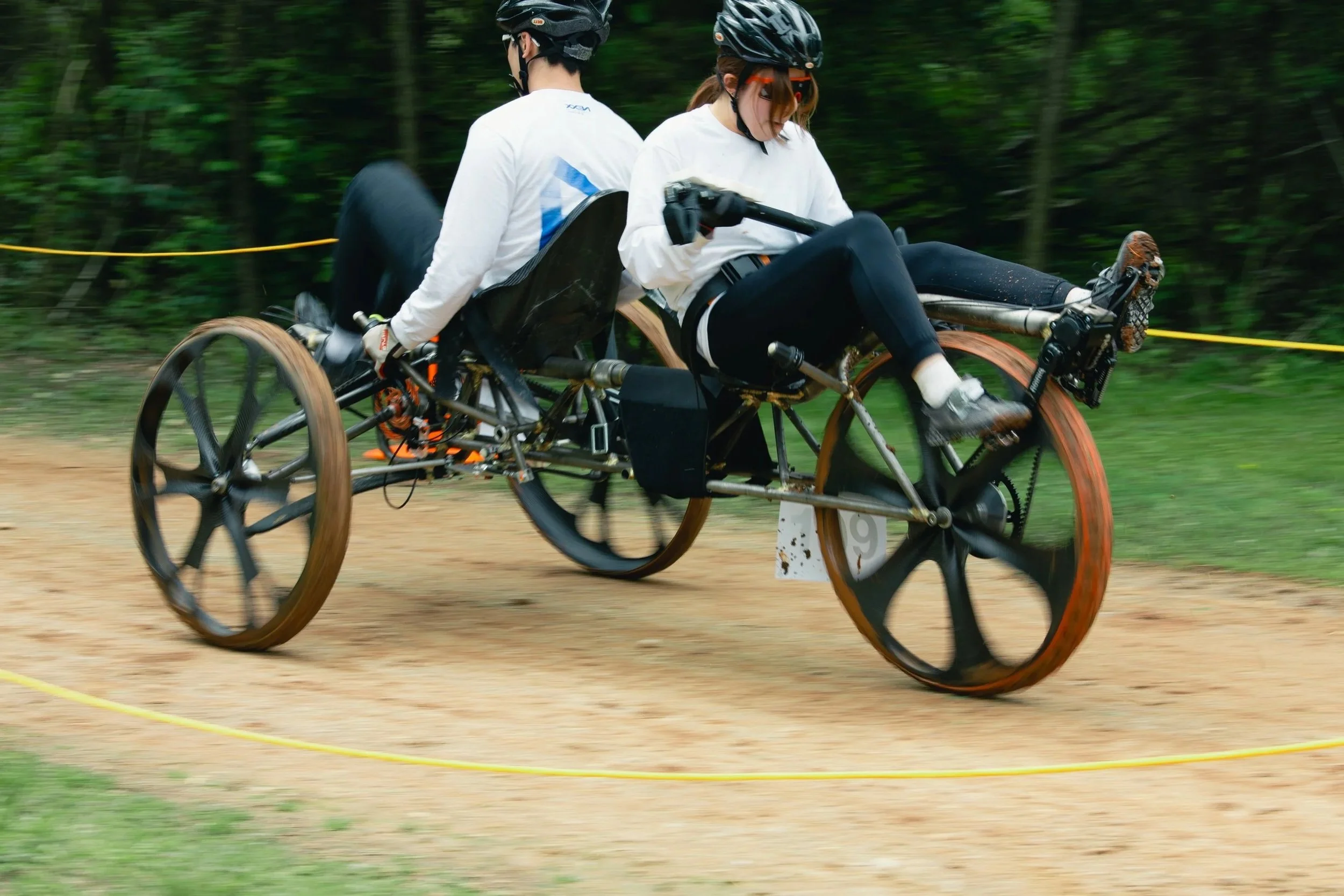
RISD Rover designs and fabricates an extraterrestrial vehicle that adheres to NASA’s Human Exploration Rover Challenge guidelines. In 2024, we placed 5th out of ~150 international college teams. We were the lightest rover at 94 pounds, earning the “Featherweight Award”.

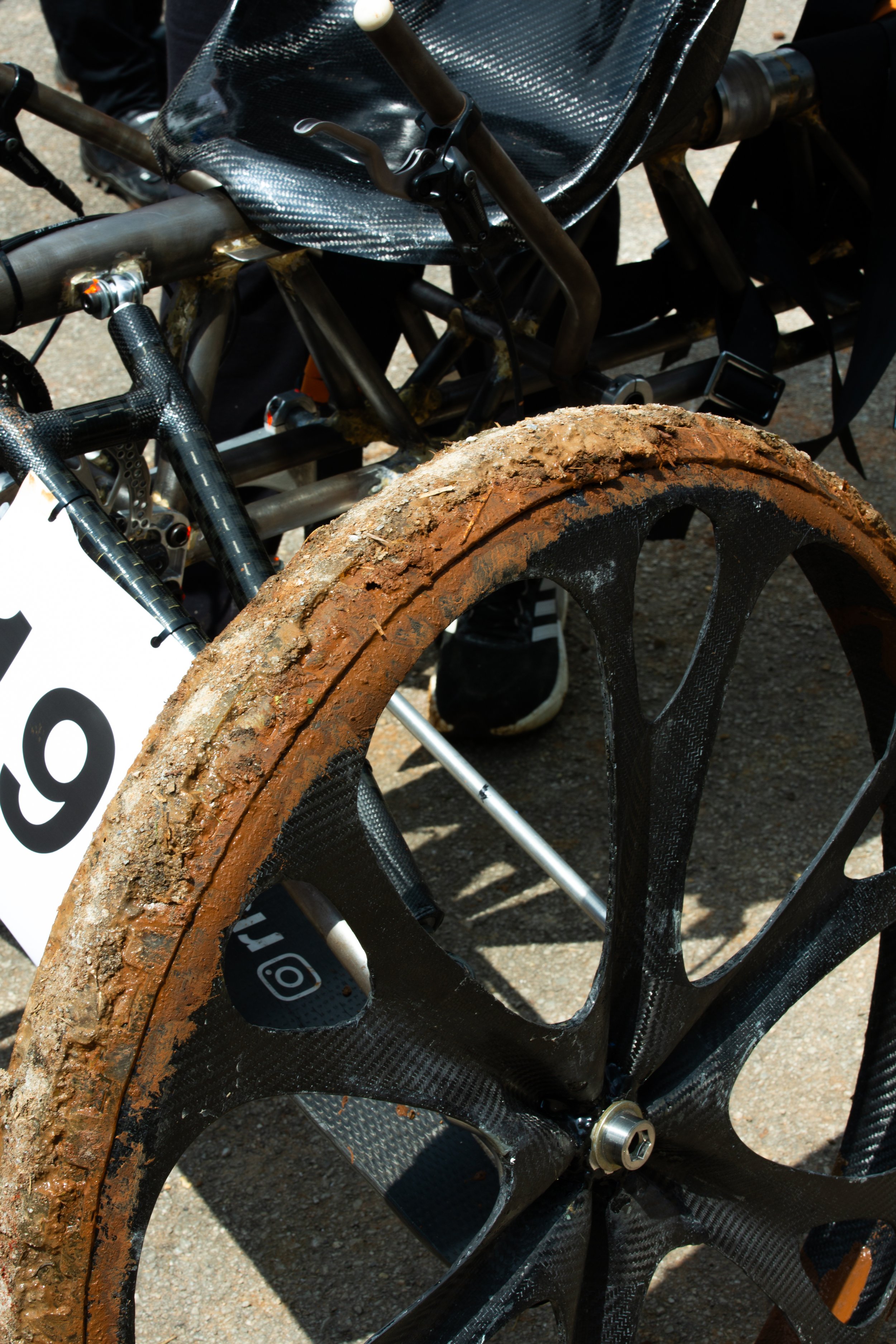
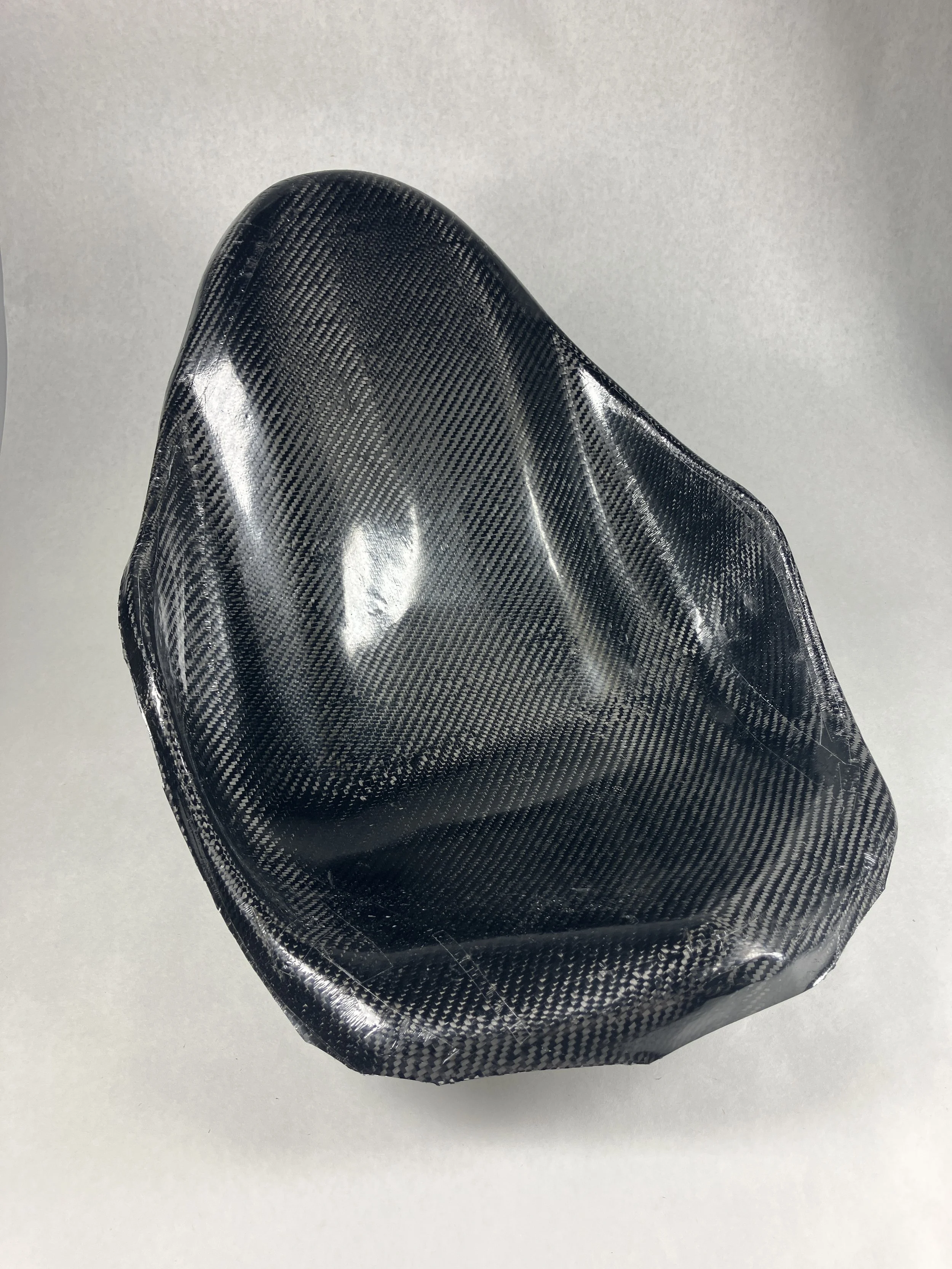
The 2024 Rover has a carbon fiber epoxy seat. A positive mold is sculpted out of foam and sealed with epoxy. Fiberglass and epoxy are laid over this positive mold and cured. Pre-preg carbon fiber epoxy is laid in this negative fiberglass mold. The fiberglass mold is necessary because Pre-preg requires a high temperature to cure, which typically melts foam.
Large bolsters are part of the design for Rover pilots to brace against when steering or pedaling hard.
Total seat weight is 1.4 lbs.


The 2025 Rover has a space frame chassis. It is an alloy-composite hybrid construction. Prefab carbon fiber epoxy tubing is tied together laterally with manually milled 7075 aluminum alloy plates. The plates are anodized and bonded to the tubing with Scotch-Weld DP 420 to resist torsional loads.

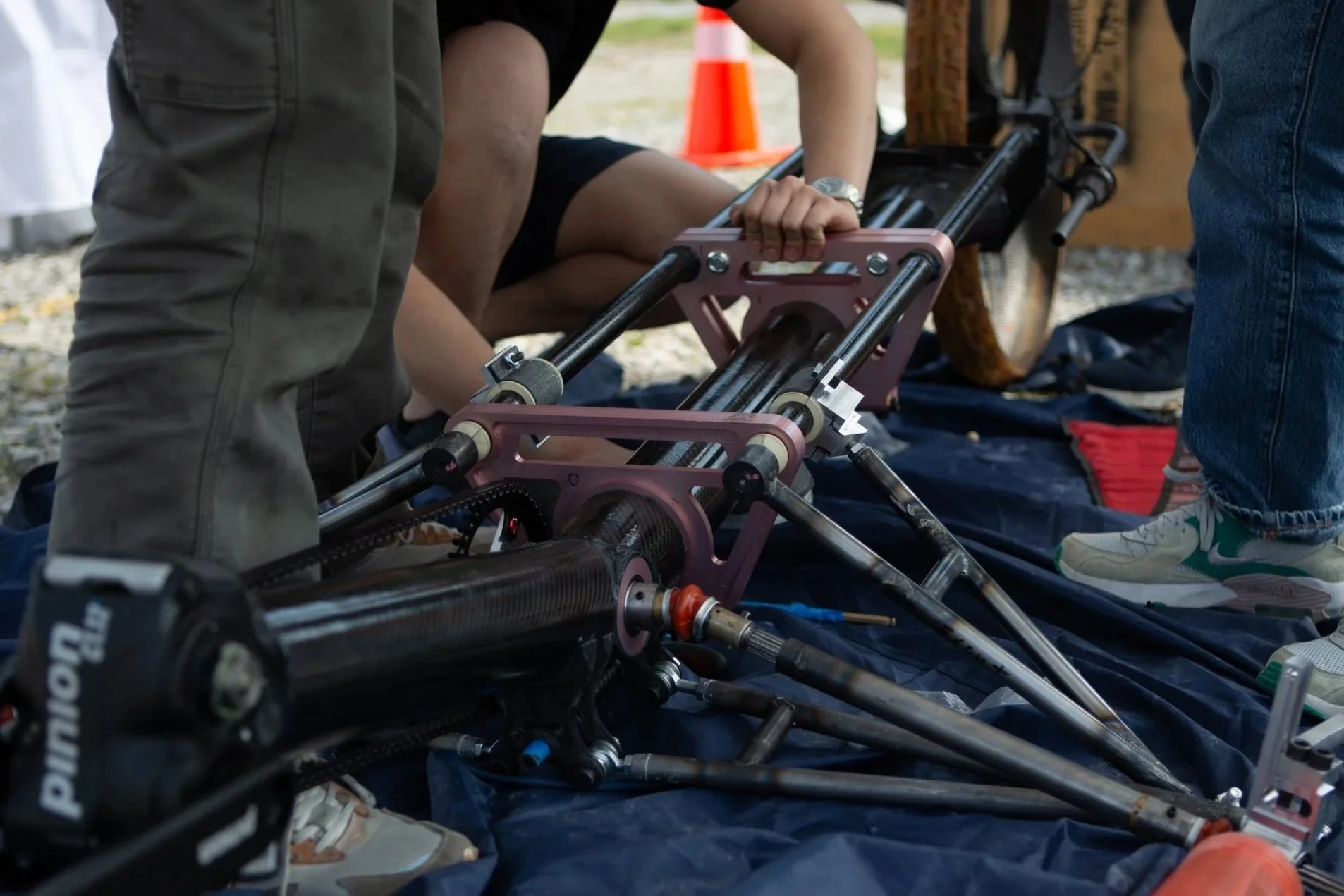
“Bends” are required in the carbon fiber to achieve the chassis's desired geometry. Custom joinery is made from multi-part 3D-printed molds. The vacuum bag runs through the internal cavity and is drawn toward the interior of the mold when a vacuum is pulled.

